How a Napoleonic war, a Nazi escape and a very large ski pole shaped America’s favorite ski town
When celebrating America’s birthday, it’s tempting to imagine that everything changed dramatically as soon as 56 men signed a piece of paper. But history rarely works that way.
Bob Cottrell, a historian at the Conway Public Library, describes this perfectly: “Before the Revolutionary War, everyone was chopping wood and carrying water. After the Revolutionary War, everyone was chopping wood and carrying water.”
Daily life didn’t transform overnight. What changed was something much deeper—the idea of who held sovereignty, who belonged to this land and what kind of place it could become.
The Mt. Washington Valley sits at the center of that story. Long before the nation turned its eyes west, this stretch of northern New Hampshire was already shaping the character of American life.
The First
New Hampshire’s role in the founding of this nation is often overlooked in American history. Seven months before the Declaration of Independence was ever adopted, New Hampshire was already on its way out. On Jan. 5, 1776, New Hampshire’s Provincial Congress adopted the first written state constitution in American history, formally establishing an independent government no longer tied to the British Crown.
It was the first of thirteen colonies to make that break. The new constitution even omitted an executive branch entirely—an act of self-governance that reflected the deep distrust of concentrated power.
New Hampshire soon became a crucial piece in the Revolutionary War when it broke out four months later, providing food, gunpowder, supplies and uniforms to the Continental Army. These contributions were essential for keeping the revolutionary effort alive.
A Town Named for an Unlikely Friend
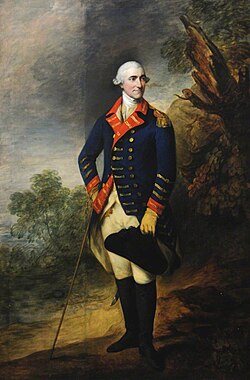
Here in the Valley, the Revolutionary era left a particularly interesting mark. The town of Conway carries the name of General Henry Seymour Conway, a British military commander. At first glance, naming an American town after a British general seems like a strange choice, but Conway’s story is more complicated than his British title.
Colonial Governor Benning Wentworth chartered the town of Conway in 1765, naming it in honor of Henry Seymour Conway, a man who was one of the most outspoken British voices in favor of the American colonies. Conway successfully moved the repeal of the Stamp Act in Parliament in 1766, opposed punishing colonial taxation policies, and later openly criticized the continued British prosecution of the war against these policies. He was among the few who believed the Americans had a rightful case.
The town of Conway carries the name not of an enemy, but an ally in the halls of British power—a reminder that the struggle for independence had friends on both sides of the Atlantic.
Stone Walls and a Distant War
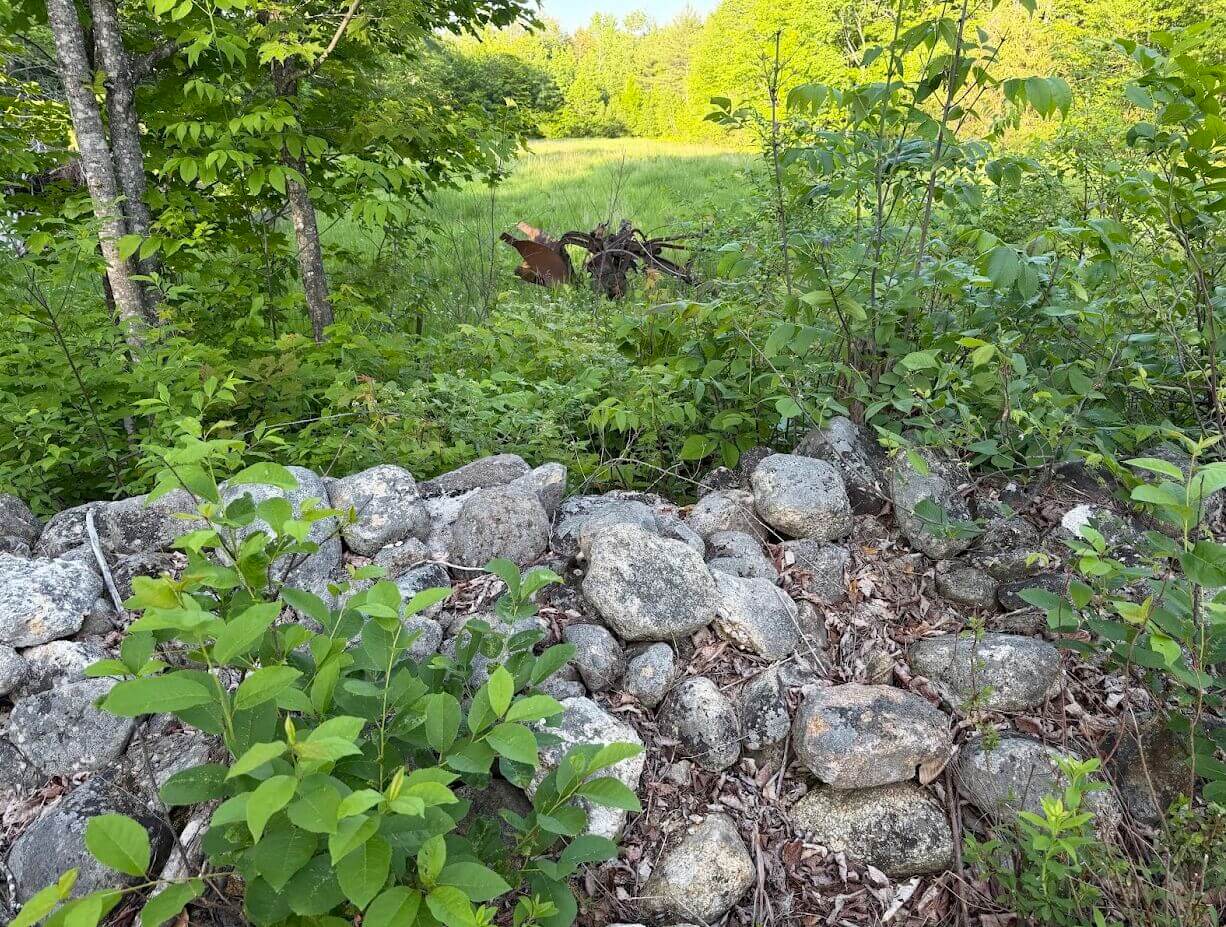
As you drive the back roads of the Mt. Washington Valley today, you’ll notice stone walls throughout the landscape. These walls feel ancient and local, but their origin reaches across the ocean to the chaos of Napoleonic Europe.
For centuries, Spain had maintained a strict embargo (punishable by death) on the export of Merino sheep, whose fine wool was among the most valuable commodities in the world. Then, in 1808, Napoleon invaded Spain, and the embargo collapsed. William Jarvis, an American diplomat stationed in Portugal, brought approximately 4,000 Merino sheep back to New England.
By 1840, New Hampshire was home to roughly 600,000 sheep (about two for every person in the state). To contain them, farmers cleared forests and built stone walls across hillsides. It is estimated that 75% of New Hampshire was open land at the height of what became known as “Sheep Fever.” Only the stone walls are what remain. When you see them as you're driving on scenic roads throughout the area, you’re looking at the agricultural legacy of a Napoleonic war, a diplomat’s gamble and the labor of generations of New Hampshire farmers.

The Mountains Get Their Names
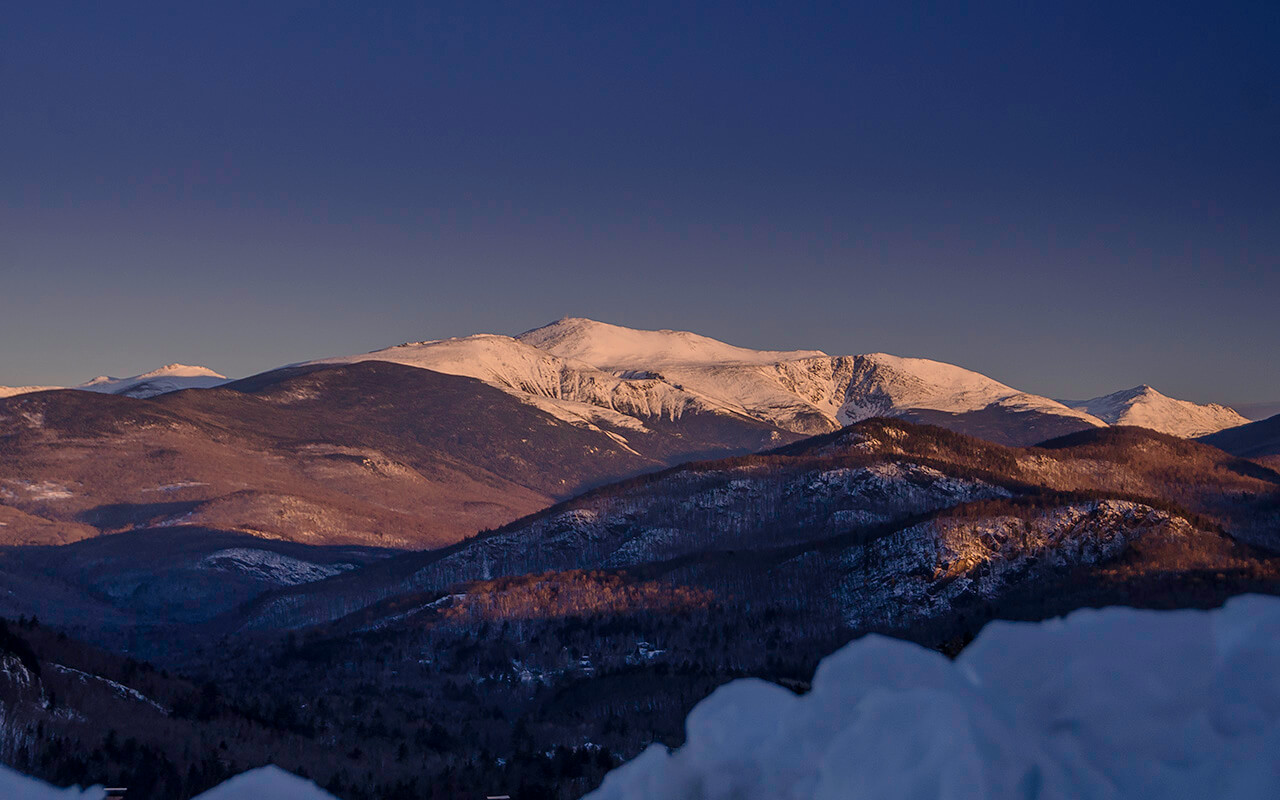
The peaks that define the Valley were not always called what we know them as today. The Abenaki people knew them as Agiocochook, “Home of the Great Spirit.”
Then, in the summer of 1820, a party from Lancaster, NH set out with a plan to give the mountains a name. Led by local guide Ethan Allen Crawford, they decided to honor the young nation by naming the peaks after its presidents. The tallest became Mount Washington. The rest fell into order: Adams, Jefferson, Madison, Monroe. Soon there were too many mountains and not enough presidents so they turned to Founding Fathers: Franklin, Webster, Adams. Later generations would add more names as more presidents served.
The act of naming after presidents and Founding Fathers was an assertion that these mountains belong to the American story, and today, the Presidential Range remains one of the most powerful symbols of the American landscape.
The Birth of a Ski Town
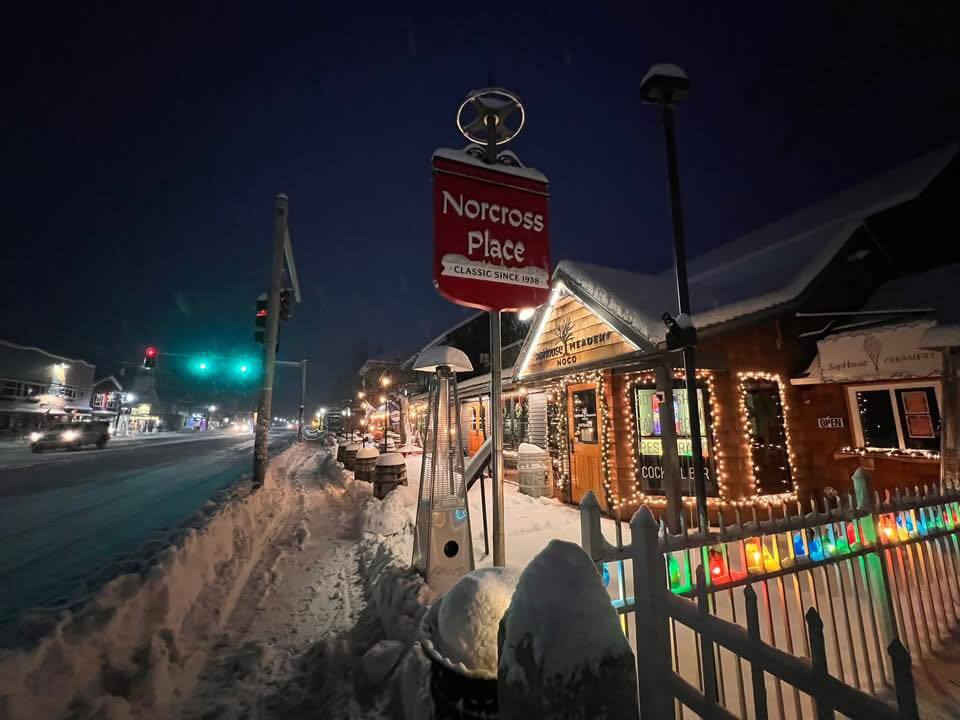
The next great generation of the Mt. Washington Valley arrived on snow. In the 1930s, a man named Carroll Reed began what would become a revolution in American recreation. Reed opened a ski shop in Jackson before moving his flagship operation to North Conway, right where Cheese Louise, Saco River Brewing Taphaus and Sap House Meadery stand today. He quickly became one of the most influential figures in the early history of New England skiing.
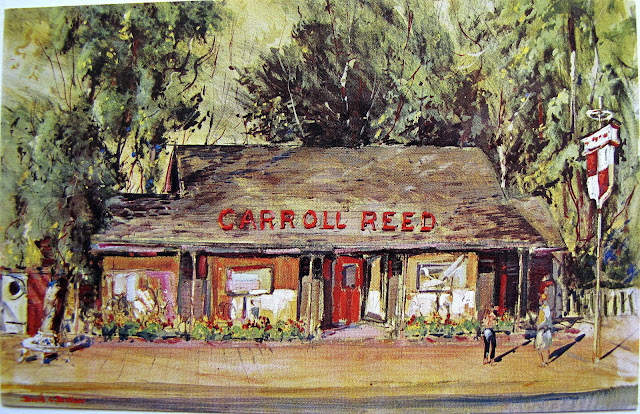
His shop grew into a small empire. At its peak, the Carroll Reed Ski Shops chain had over 50 stores. Directly in front of the North Conway store, he erected what became a beloved local landmark: a ski pole nearly 19 feet tall, which still stands today as the “World’s Largest Ski Pole,” now marking Norcross Place in North Conway Village.
The Rescue
Hannes Schneider was already the most famous ski instructor in the world when the Nazis came for him in 1938. Born in Austria, Schneider had developed the Arlberg technique—a revolutionary crouched method that combined speed with control—and built the world’s first formal ski school at St. Anton am Arlberg. His school attracted students from across the world. His fame was matched only by his outspoken contempt for Adolf Hitler and the Nazi Party.
In March 1938, following Germany’s annexation of Austria in the Anschluss, Schneider was arrested and placed under house arrest in Garmisch, Germany. His school was seized.
In North Conway, Harvey Dow Gibson was paying close attention. A North Conway native who had risen to become president of the Manufacturers Trust Company in New York, Gibson had already been developing Cranmore Mountain as a ski resort. As a creditor of Germany from World War I reparations, he held financial leverage. Gibson began applying pressure to negotiate Schneider’s release. He sat on Germany’s board of creditors and made the case that freeing Schneider was in Germany’s interest.
On February 11, 1939, Hannes Schneider and his family stepped off a train at North Conway station. Gibson had arranged a celebration upon his arrival and townspeople had come out in bunches to line the platform and form an arch with their ski poles for the Schneiders to pass beneath. It was one of the most iconic arrivals the Valley has ever seen—a skier rescued from fascism arriving at the foot of the mountains he would make famous across America.
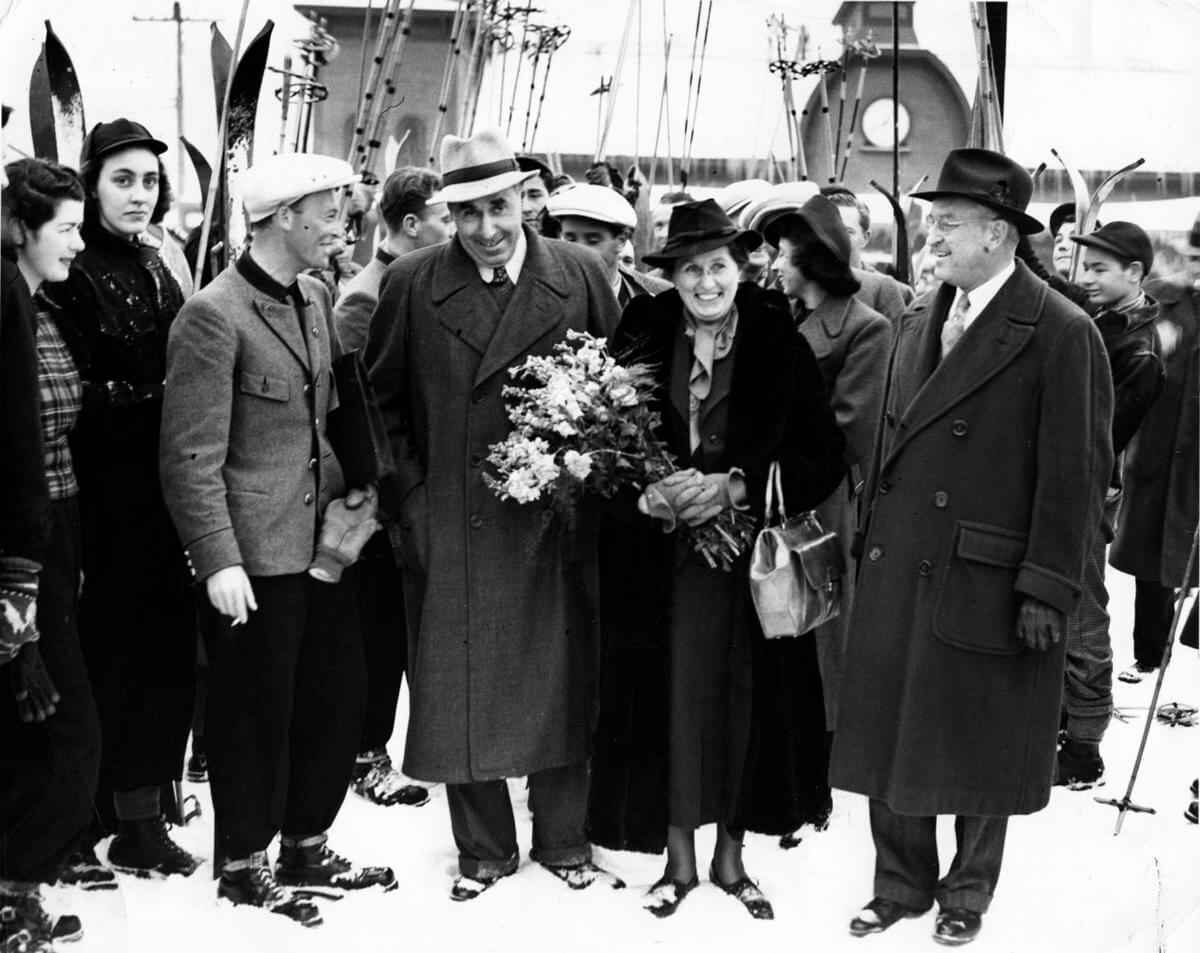
Schneider took control of the ski schools at Cranmore, bringing the Arlberg technique to a new generation of American skiers. During World War II, he even trained members of the legendary 10th Mountain Division at Cranmore—the elite skiing and mountaineering unit that would go on to fight in the Italian Alps.
Celebrating 250 Years
As America turns 250, the Mt. Washington Valley has plenty to look back on. A town named after a man who went against his own country to stand up for the colonists. Stone walls built from the fallout of a Napoleonic war. Peaks named to honor our presidents and founders. A road to the summit that predates the automobile. A ski slope shaped by one of the most remarkable rescues of the 20th century. All of it was fought for by people who believed this place was worth something.
That is worth celebrating.
We're grateful to Bob Cottrell of the Conway Public Library, whose knowledge of the Valley's history made this piece possible.
To learn more about New Hampshire vacations, go to www.VisitNH.gov